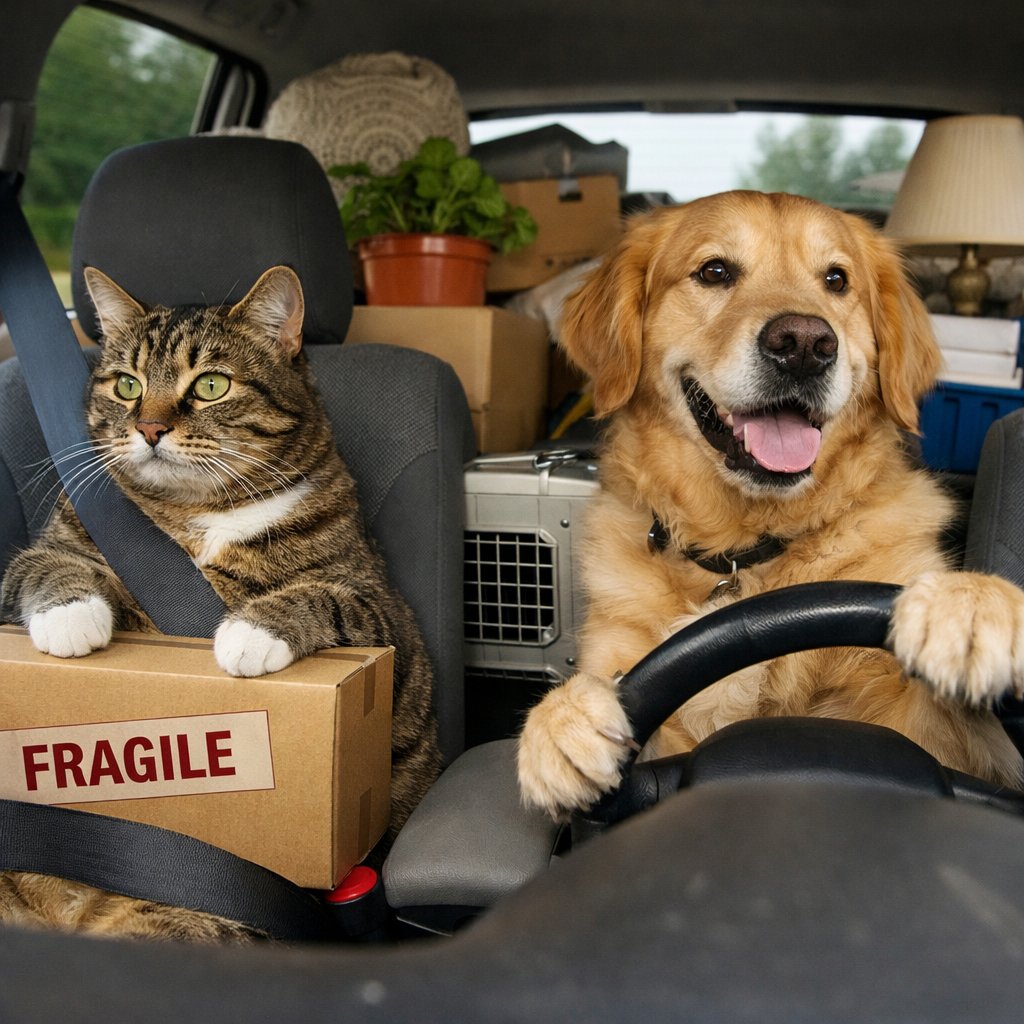
Relocation and Living with Pets in Montenegro: A Complete Guide
Montenegro is not a member of the EU, but it harmonizes its legislation with European standards. This means that the procedure for importing animals here is strictly bureaucratized, especially for citizens of non-EU countries (including the Russian Federation and Ukraine). Below are the current documentation requirements, an overview of veterinary clinics, and rules of keeping pets.1. Rules for Importing Animals
Document preparation is the most difficult stage. The process is regulated by the Law on Veterinary Medicine. The main goal is rabies prevention. Basic requirements for everyone:- Microchip: A 15-digit ISO 11784 or 11785 compliant chip is mandatory. It must be implanted before rabies vaccination. If the chip is of another standard, the owner must provide their own scanner.
- Rabies vaccination: The animal must be older than 3 months. The vaccination must be administered no earlier than 30 days and no later than 12 months before entry. Multi-year vaccines may not be recognized.
- Veterinary certificate: Issued by a state veterinarian of the country of departure within 10 days prior to travel (form according to EU Regulation 576/2013).
- Owner’s declaration: Confirmation that the import is non-commercial (up to 5 animals) and that the owner accompanies the animal.
Important: Rabies antibody titer test.
For animals arriving from countries with a high rabies risk (including Russia, Ukraine, and many Asian countries), a certificate with titer test results is mandatory.
- The blood sample is taken no earlier than 30 days after vaccination.
- Import is permitted no earlier than 3 months after the blood sampling date.
- The titer must be at least 0.5 IU/ml.
- The laboratory must be EU-accredited.
2. Combined Vaccinations and Treatments
In addition to rabies, the following combined vaccines are required (or strongly recommended by veterinarians) for documentation:- Dogs: Distemper, hepatitis, parvovirus, parainfluenza, leptospirosis.
- Cats: Rhinotracheitis, calicivirus, panleukopenia, leukemia.
3. Border Control
The official entry point with veterinary control is Podgorica Airport. The veterinary service must be notified of the animal’s arrival in advance. Violation of import rules may result in:- Quarantine;
- Return of the animal to the country of departure;
- Euthanasia (in extreme cases).
4. Veterinary Care in Montenegro
The level of medicine in large cities is acceptable, but there are few narrow specialists. In rural areas, veterinarians focus on livestock. Recommended clinics:- Podgorica: Hasvet PG International (the only 24/7 clinic, MRI, CT, surgery available), Veterina Popović, Pet Centar Montvet.
- Kotor: Marysol VET (therapy, nephrology). For sterilization, expats recommend contacting Kotor Kitties.
- Budva: Pet House (basic services).
Prices and language: Service costs are lower than in Europe (consultation €20–50, vaccination €10–20). Russian-speaking staff are rare; in large clinics, doctors speak English.
5. Pet Food and Supplies
There is no shortage of pet food. Main points of sale:- Pet shops: Chains Kips (the largest, accessories available) and Pet House.
- Supermarkets: Chains Voli, Idea, Datika offer mass-market and mid-range brands.
- Brands: Royal Canin, Pedigree, Almo Nature are widely available. The high-quality Turkish brand Bonacibo is popular.
Tip: If your pet requires medical or rare hypoallergenic food, bring a supply with you for the initial period. In Montenegro, the selection of veterinary diets is limited, and they often need to be ordered via European online stores with delivery.
6. Walking Rules and Fines
The Animal Welfare Law (2008) and municipal regulations govern owner behavior. Leash: Mandatory within city limits (especially strictly enforced in Podgorica and tourist centers, such as Kotor Old Town). Muzzle: Mandatory for dogs classified as "dangerous breeds" (e.g., pit bulls). Such dogs are also prohibited from being walked with children under 16. Cleaning: The owner must clean up pet excrement. Restrictions: Dogs are prohibited from entering museums, churches, most restaurants (indoors), and equipped beaches during the season. Animals are generally welcomed on open café terraces.
Fines: Failure to clean up excrement carries a fine of up to €100. Despite the fact that locals often violate this rule, police attention toward foreigners may be stricter.