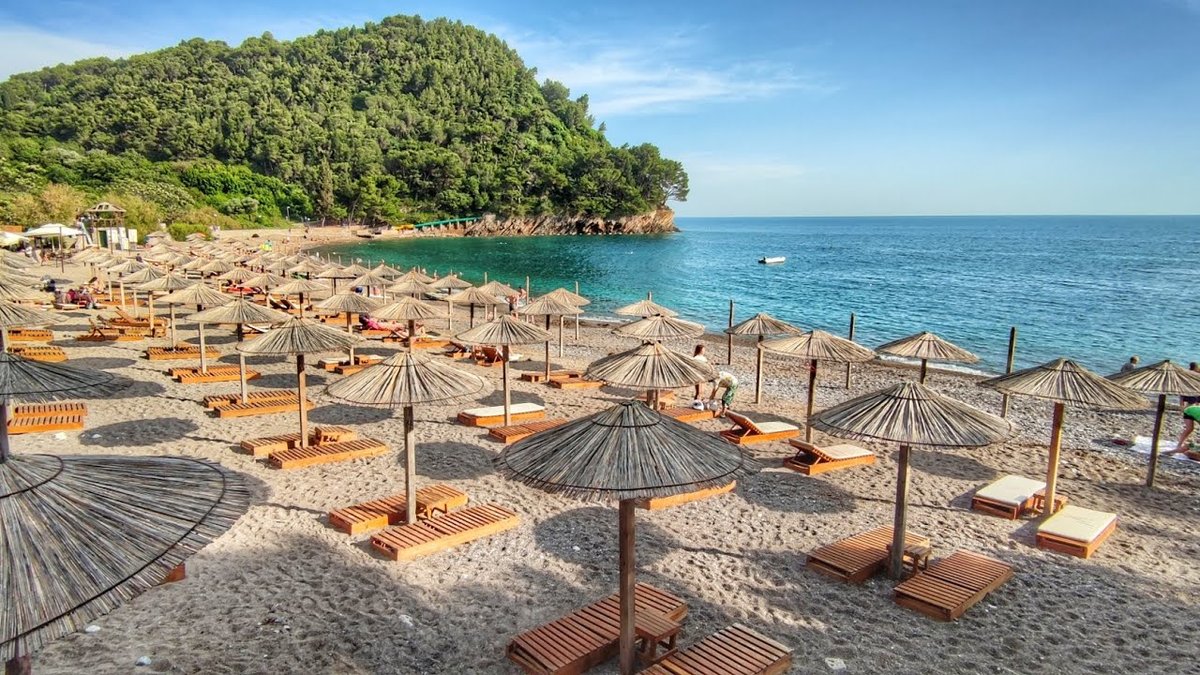
Overview of Beaches and Swimming Areas in Montenegro
The length of Montenegro’s coastline is 293 km. Along this stretch there are 117 beaches, 73 of which have official infrastructure. The main surface type is pebbles (from fine gravel to large boulders), which ensures water transparency up to 35 meters. Sandy beaches are less common and are concentrated mainly in the south.
In addition to the sea coast, inland recreation is developed in the country — on lakes and rivers, where the water is significantly cooler but fresh and clean.
Sandy beaches
Suitable for families with children due to the gentle entry into the water. Mostly concentrated on the Ulcinj Riviera (south of the country, border with Albania) and selectively in Budva.
- Velika Plaža (Ulcinj). 13 km of dark volcanic sand. Known for its healing properties for joints. Due to constant winds, it is a center for kitesurfing.
- Trsteno (near Budva). A small beach (200 m) with fine sand and a very gentle entry. Ideal for small children.
- Ada Bojana (Ulcinj). An island in the delta of the Bojana River. Traditionally a nudist area with a sandy shore and fish restaurants. Paid entry.
- Drobni Pijesak (Petrovac). Sand mixed with fine pebbles. A secluded place accessible via a forest path. There is a freshwater spring.
- Mala Plaža (Ulcinj). City beach. Infrastructure is well developed, but it can be dirty due to large crowds and wind.
Pebble beaches
The most common category. The water here is cleaner than on sandy beaches, but entry into the water may be more difficult.
- Mogren (Budva). Two beaches connected by a tunnel in the rock. Awarded the “Blue Flag”. Fine pebbles, picturesque cliffs.
- Bečići. A wide strip of fine-pebble beach (1.5 km). Developed infrastructure: parks, playgrounds, water attractions.
- Kamenovo. Located between Rafailovići and Pržno. Turquoise water, access through a pedestrian tunnel.
- Jaz (Budva). A large beach (1.2 km) with a campground and concert venue. Surface — pebbles, in places turning into sand.
- Sveti Stefan. Beach overlooking the island-hotel. Surface — fine pebbles with a pink hue. Equipment rental prices are high (VIP zones up to 100–150 euros).
- Lučice (Petrovac). A cozy horseshoe-shaped bay surrounded by olive groves.
Wild beaches
Options for those seeking solitude. Infrastructure (toilets, showers, sunbeds) is absent. Access is often difficult (steep trails, dirt roads).
- Žukovica. Pebble beach, accessible by car via a dirt road (5 km). Complete isolation.
- Zagorski Pijesak. 16 km from Budva. Rocky shore. No shade, umbrellas and water must be brought with you.
- Crvena Glavica. Near Sveti Stefan. Rocky areas, popular among nudists.
- Hladna Uvala. Between Bar and Ulcinj. An isolated bay with olive trees, excellent visibility for diving.
- Pecka (Luštica). Formerly a wild beach, now a small bar has appeared.
Freshwater bodies (Lakes and rivers)
An alternative to sea recreation. The water here is cooler (+15...+20°C), and there are significantly fewer people.
- Skadar Lake. Warm water, swimming from a boat or on equipped beaches (for example, Murići).
- Black Lake (Žabljak, Durmitor Park). A mountain glacial lake. Refreshing swimming, relevant after trekking in peak heat.
- Tara and Morača rivers. Very cold and clean water. Swimming is possible only in calm backwaters (for Tara — often as part of rafting tours).
- Niagara Waterfall (Podgorica). An artificial waterfall on the Cijevna River. Popular among locals.
Practical information and prices (Season 2025)
When planning your budget and logistics, consider the following facts:
- Equipment cost: A set of two sunbeds and an umbrella costs from 10 to 50 euros depending on the popularity of the beach. There are free areas for placing your own towel.
- Food: Lunch at a coastal café will cost 5–15 euros per person.
- Transport: Buses run to popular beaches (Olympia Express in Budva, price 1.5–3 euros). For wild beaches, car rental is required (30–50 euros/day).
- Ecology: Choose beaches with the “Blue Flag”. During peak season, city beaches (especially in Budva) may have litter.