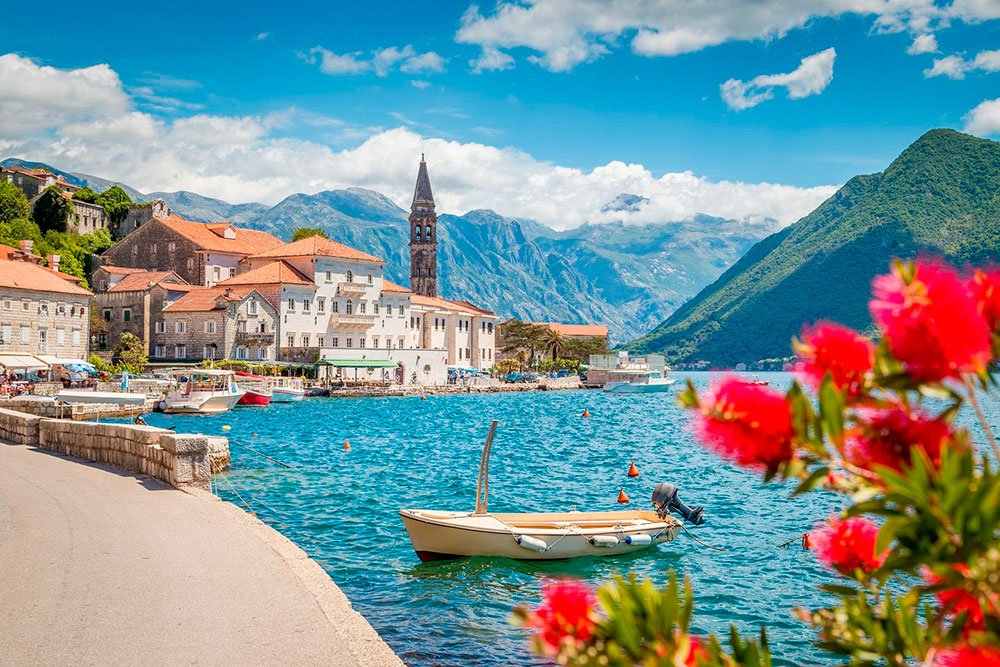
Main Attractions of Montenegro: A Regional Guide
Montenegro is a compact country where, in a single trip, you can combine mountain trekking, canyon rafting, and excursions to medieval towns. Below is an overview of key locations for independent route planning.National Parks
About 10% of the country’s territory is occupied by five national parks. Entry is paid (standard price — from 3 euros).
Durmitor (North)
A UNESCO World Heritage Site. Main features:
- Landscape: 50 peaks over 2000 meters, 18 glacial lakes (“mountain eyes”).
- Main attraction: Black Lake and the town of Žabljak (base for accommodation).
- Activities: 150 km of marked trails, winter skiing, rafting on the Tara River.
Skadar Lake
The largest freshwater lake in the Balkans, shared with Albania. It is a key birdwatching destination — 270 species live here, including the rare Dalmatian pelican.
- What to see: Islands with monasteries, Grmožur Fortress, Murići Beach.
- Logistics: The main starting point for boat tours is the village of Virpazar. Tour prices start from 5 euros.
Biogradska Gora
One of the last primeval forests in Europe in the Bjelasica massif. Biograd Lake is located in the center. Tourists have access to a sightseeing train, boat rentals, and an easy trail around the lake 3.4 km long.
Lovćen
Located above the Bay of Kotor. The main point is the mausoleum of Petar II Petrović Njegoš at an altitude of 1657 meters. From here, a panorama of most of the country opens up (“Stone Sea”). The nearest city is Cetinje.
Prokletije
The youngest park (founded in 2009) on the border with Albania. Wild mountains, Ali Pasha’s Springs.
Old Towns and Fortresses
Historic centers reflect Roman, Venetian, and Ottoman influence.
- Kotor: A UNESCO-protected city. Main sites: St. Tryphon’s Cathedral and the city walls.
Logistics: Climbing the walls is paid (about 8 euros) and requires physical endurance. - Budva: One of the oldest settlements on the Adriatic (2500 years). The Old Town includes a citadel, the Church of the Holy Trinity, and an archaeological museum.
- Herceg Novi: Located at the entrance to the bay. Known for fortresses (Kanli Kula, Forte Mare), Savina Monastery, and Bellavista Square.
- Stari Bar: An open-air museum. These are the ruins of a city destroyed in 1878, with a preserved aqueduct and citadel.
- Ulcinj: The southernmost city with strong Ottoman influence and Illyrian roots.
Monasteries and Spiritual Centers
Ostrog
A 17th-century monastery carved into a sheer cliff at an altitude of 900 meters. Dedicated to Saint Basil of Ostrog. Consists of the Lower and Upper Monastery (distance between them — 3 km, can be walked or reached by transport).
Significant monasteries:
- Morača (13th century): Located in the Morača River canyon. Known for frescoes of the Raška school.
- Savina (Herceg Novi): A complex of three churches, dating back to the 11th century.
- Beška: A women’s monastery on an island in Skadar Lake (14th century), accessible only by water.
- Dobrilovina: A 15th-century monastery on the Tara River.
Canyons and Outdoor Activities
The country’s terrain is ideal for extreme sports.
- Tara River Canyon: Depth up to 1333 m (second in the world after the Grand Canyon).
Activities: Rafting (22 rapids), zipline near the Đurđevića Bridge. - Nevidio Canyon: Length 3.5 km, depth 150 m.
Feature: Requires special equipment. Passage is possible only with an instructor. - Morača River Canyon: Accessible for viewing from the highway, suitable for canyoning.